
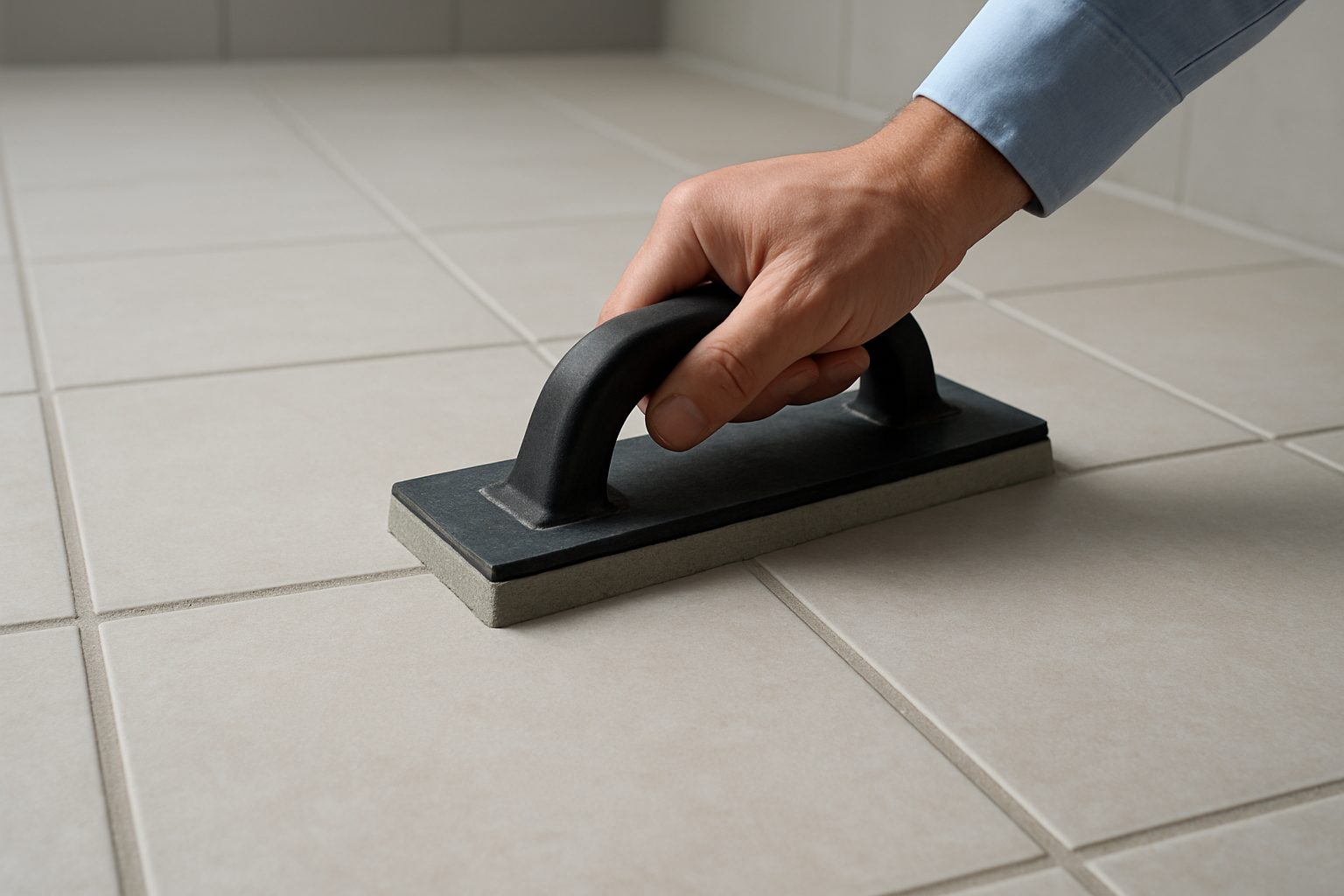
Every business has surfaces that customers and employees interact with daily. Floors, walls, and countertops set the tone for a space before a single word is spoken. When those surfaces include tile, the condition of the grout between them plays a larger role in that first impression than most business owners realize. For commercial properties across Florida, commercial grout replacement Florida services address a problem that climate, traffic, and time make virtually inevitable.
Contents
- Why Do Florida Commercial Properties Face Greater Grout Challenges?
- What Problems Does Deteriorating Grout Cause in Commercial Settings?
- What Does the Commercial Grout Replacement Process Involve?
- How Do Different Florida Industries Approach Grout Replacement?
- What Should Be Considered When Selecting a Grout Replacement Contractor in Florida?
- Building a Maintenance Plan After Grout Replacement
- Taking Care of What Customers See First
This article walks through the practical realities of commercial grout replacement—why it matters, what the process involves, and how Florida businesses across different industries benefit from addressing grout deterioration before it escalates into a more serious structural or hygiene concern.
Why Do Florida Commercial Properties Face Greater Grout Challenges?
Florida’s environment is uniquely demanding on building materials. The state’s year-round humidity keeps surfaces in a near-constant state of moisture exposure. Coastal regions add salt air into the equation, which is corrosive to grout over extended periods. Seasonal storms bring heavy rainfall that tests the waterproofing integrity of tiled surfaces, particularly in outdoor or semi-outdoor commercial areas like pool decks, patios, and covered walkways.
Add to this the intensity of commercial use—heavy foot traffic, industrial cleaning chemicals, food and beverage spills, and the general wear of daily business operations—and it becomes clear why grout in Florida commercial spaces deteriorates faster than in less demanding environments. The question for most business owners is not whether their grout will need replacing, but when and how to approach the replacement strategically.
What Problems Does Deteriorating Grout Cause in Commercial Settings?
The problems associated with deteriorating grout fall into three broad categories: structural, hygienic, and reputational.
Structurally, compromised grout allows water to penetrate beneath the tile surface. Over time, this weakens the adhesive bond between tile and substrate, leading to loose, cracked, or lifted tiles. Lifted tiles are a direct safety hazard, creating uneven surfaces that increase the risk of slips and falls. In a commercial setting, this type of hazard carries liability implications that extend well beyond the cost of the repair itself.
From a hygiene standpoint, cracked and porous grout is difficult to clean effectively. Bacteria, mold, and mildew establish themselves in compromised grout joints and resist standard cleaning protocols. In food service and healthcare environments, this is a serious concern. Health inspectors cite grouting deficiencies as a common violation, and businesses that fail to address them face the prospect of failed inspections and the operational and reputational damage that follows.
Reputationally, the visual impact of deteriorating grout is straightforward. Stained, crumbling, or discolored grout makes tiled surfaces look neglected regardless of how clean everything else in the space may be. Customers notice, even when they do not articulate it. The condition of a business’s physical environment shapes perceptions of quality and trustworthiness in ways that are difficult to quantify but easy to observe.
What Does the Commercial Grout Replacement Process Involve?
Understanding the replacement process helps business owners plan effectively and set accurate expectations for the scope and timeline of a project.
The process begins with a professional assessment of the existing tile and grout condition. This evaluation identifies areas of structural compromise, moisture damage, and surface deterioration, and informs the contractor’s recommendation for the extent of replacement required. In some cases, only specific sections of a tiled surface need replacement; in others, the deterioration is widespread enough to warrant a complete refresh.
Removal of existing grout is the next step. Contractors use specialized tools to extract grout from tile joints without damaging the tiles themselves. This is a precision task that requires experience, particularly on older tile installations where the tiles may be more fragile or the original installation less precise by modern standards.
Once the old grout is removed, the joints are cleaned and prepared for new material. The selected grout is then applied, worked into the joints, and finished to create a clean, level surface. After installation, a curing period allows the grout to achieve its full structural integrity before the surface is subjected to foot traffic or cleaning. Sealing is typically applied after curing as a final protective measure, particularly for cement-based grout products.
How Do Different Florida Industries Approach Grout Replacement?
The way a business approaches grout replacement is shaped by the nature of its operations and the specific demands of its environment.
Hospitality businesses—hotels, resorts, and restaurants—prioritize the visual and hygienic aspects of grout replacement. Guest-facing areas like lobbies, dining rooms, and restrooms must maintain a consistent standard of cleanliness and appearance. Many hospitality operators schedule grout replacement as part of broader property refresh cycles, coordinating the work with other renovation activities to minimize guest disruption.
Healthcare facilities approach grout replacement as a compliance and infection control issue. Tiled surfaces in clinical areas, restrooms, and corridors must meet strict sanitation standards. Epoxy grout is commonly specified in these environments for its non-porous, bacteria-resistant properties. Replacement projects in healthcare settings are typically planned with meticulous attention to minimizing disruption to patient care areas.
Retail and commercial office properties focus on durability and appearance. High-traffic entrance areas and common spaces see significant wear, and maintaining a professional appearance is a consistent priority. Grout replacement in these settings is often scheduled during low-traffic periods—weekends, public holidays, or seasonal slowdowns—to keep disruption to tenants and visitors to a minimum.
What Should Be Considered When Selecting a Grout Replacement Contractor in Florida?
The quality of a commercial grout replacement project depends substantially on the expertise of the contractor performing the work. Several factors should guide the selection process.
Experience with commercial-scale projects is the most important consideration. Commercial grout replacement differs from residential work in scope, material requirements, and the operational constraints that must be respected. A contractor who primarily handles residential projects may not have the equipment, the team size, or the project management experience to handle a large commercial job effectively.
Knowledge of Florida’s specific conditions—climate, building codes, and the materials best suited to the local environment—is also valuable. Contractors who work regularly in Florida commercial properties develop an understanding of which grout products perform best over time in these conditions and how to plan projects around the state’s seasonal weather patterns.
Transparency about the full scope of work, materials being used, timeline, and any potential complications is a hallmark of a reputable contractor. Before signing any agreement, business owners should ensure they have a clear, written understanding of what the project will involve from start to finish.
Building a Maintenance Plan After Grout Replacement
Replacement addresses the existing deterioration, but a maintenance plan protects the investment over the long term. Several straightforward practices extend the life of new commercial grout significantly.
Regular cleaning with grout-safe products prevents surface staining and keeps the material from absorbing contaminants. Harsh acids and abrasives can damage grout over time, so cleaning protocols should be reviewed to ensure they are appropriate for the grout type installed. Periodic resealing—particularly for cement-based grout in high-moisture Florida environments—reinforces the protective barrier against water penetration. Scheduling annual inspections of tiled surfaces allows facilities teams to catch early signs of wear and address them before they escalate.
Taking Care of What Customers See First
The condition of a commercial space reflects directly on the business that occupies it. Grout is a small detail with a large impact—on safety, on hygiene, and on the impression a space makes on everyone who walks through it. For Florida businesses operating in a climate that accelerates wear, proactive grout replacement is a straightforward way to protect the physical environment, meet compliance requirements, and maintain the standard of quality that customers expect. Engaging a qualified commercial contractor to assess the current state of tiled surfaces is the practical first step toward a space that looks and performs at its best.
What You Need to Know
- Florida’s climate, characterized by humidity and salt air, significantly contributes to the rapid deterioration of grout in commercial properties.
- Deteriorating grout leads to structural issues such as water penetration that weakens the bond between tiles and substrate, resulting in loose or lifted tiles that pose safety hazards.
- Hygienically, compromised grout can harbor bacteria, mold, and mildew, particularly in food service and healthcare environments, leading to health inspection violations.
- The visual perception of stained or crumbling grout negatively impacts a business’s reputation, affecting customer trust and perceptions of quality.
- The commercial grout replacement process includes a professional assessment, removal of old grout, application of new material, and sealing for protection and durability.